Wednesday, October 18, 2023

And Dear Margaret Remembers That For Me . . .

I didn’t know much when I was 22 years old, but one thing I knew with an almost evangelical certainty was that I didn’t need a new dad.


My father dropped dead when I was 14 years old, leaving my then 37-year-old mother to raise my four little brothers and me.


Three years later, I headed off to college, living day-to-day without any goals, plans, or focus. My undergraduate transcript remains Exhibit A for those Lost Years. Suffice it to say there are no buildings, classrooms, or outdoor benches named after me on the campus of Northwestern University.


Because I was living in Evanston, roughly an hour away from our home in west suburban Villa Park, I was able to come home a fair amount during my college years to see my family and watch my brothers’ basketball games.


Around the beginning of my junior year, I learned from one of my brothers that my mom had started dating someone. My mom confirmed this the next time she and I talked, but she didn’t provide many details.


I met the man in question during my next trip home that fall. His name was Tom Sweeney (same first name as my father, both of my grandfathers, one of my uncles, and one of my little brothers), and my initial read on him was that he was polite and could hold up his end of a conversation. Beyond that, I reserved judgment.


He was divorced and he had two sons, who were roughly the same ages as the two oldest Farmer boys. He also had a daughter, but she had passed away several years earlier.


The relationship between my mom and Tom continued throughout the balance of my undergraduate years. I never asked too many questions, but my mother did appear to enjoy Tom’s company.


However, my youngest brothers, who by the mid-1980s were high school students, seemed somewhat less enamored of the new guy and his Marine Corps tendencies.


It was a basic clash of cultures. The Farmer household had long been a loose and informal operation, and my brothers and I didn’t want or need anyone with a slight authoritarian bent upsetting the status quo.


Of course, I wasn’t around much, so it was my little brothers who really bore the brunt of the order and formality the new guy was pushing during his increasingly frequent visits to our house.


I graduated from Northwestern in June 1986, and it was toward the end of my college career that I learned my mom and Tom had planned an October wedding. I was not thrilled by the news, no doubt because I was an aimless, self-centered 21-year-old, and my mother’s happiness was not something I thought much about at that time.


In fact, a few weeks after receiving my diploma, I packed a bag, borrowed a friend’s acoustic guitar (I was determined to learn how to play), and took off. I spent the better part of the next three years bouncing around the United States, working odd jobs and living with friends.


When I did come home for stretches of time -- usually to make quick money as a caddie -- I suddenly had to deal with Tom’s questions about my plans (both short- and long-term) for the future.


I dutifully came home to attend the wedding in October 1986, but it was not an event about which I was excited. Looking back, I wish I’d had the grace and big heart of my dad’s dad, who walked my mother down the aisle of the church that day.


I took some selfish comfort at the reception that evening when one of my mother’s longtime girlfriends (dating back to their high school days) gave me a big hug and told me, “Matt, I always thought the world of your dad; don’t make it too easy on this guy.”


Thinking today about that comment, I have to laugh, because Tom eventually won over both my mom’s girlfriend and me.


Indeed, within a few years of the wedding, the Farmer boys, my mother, and Tom Sweeney had reshaped our old status quo into a new one that worked well for the next few decades. We boys grew up and (more or less) stopped acting like knuckleheads, and Tom got more comfortable going with the flow when it came to my brothers and me. 
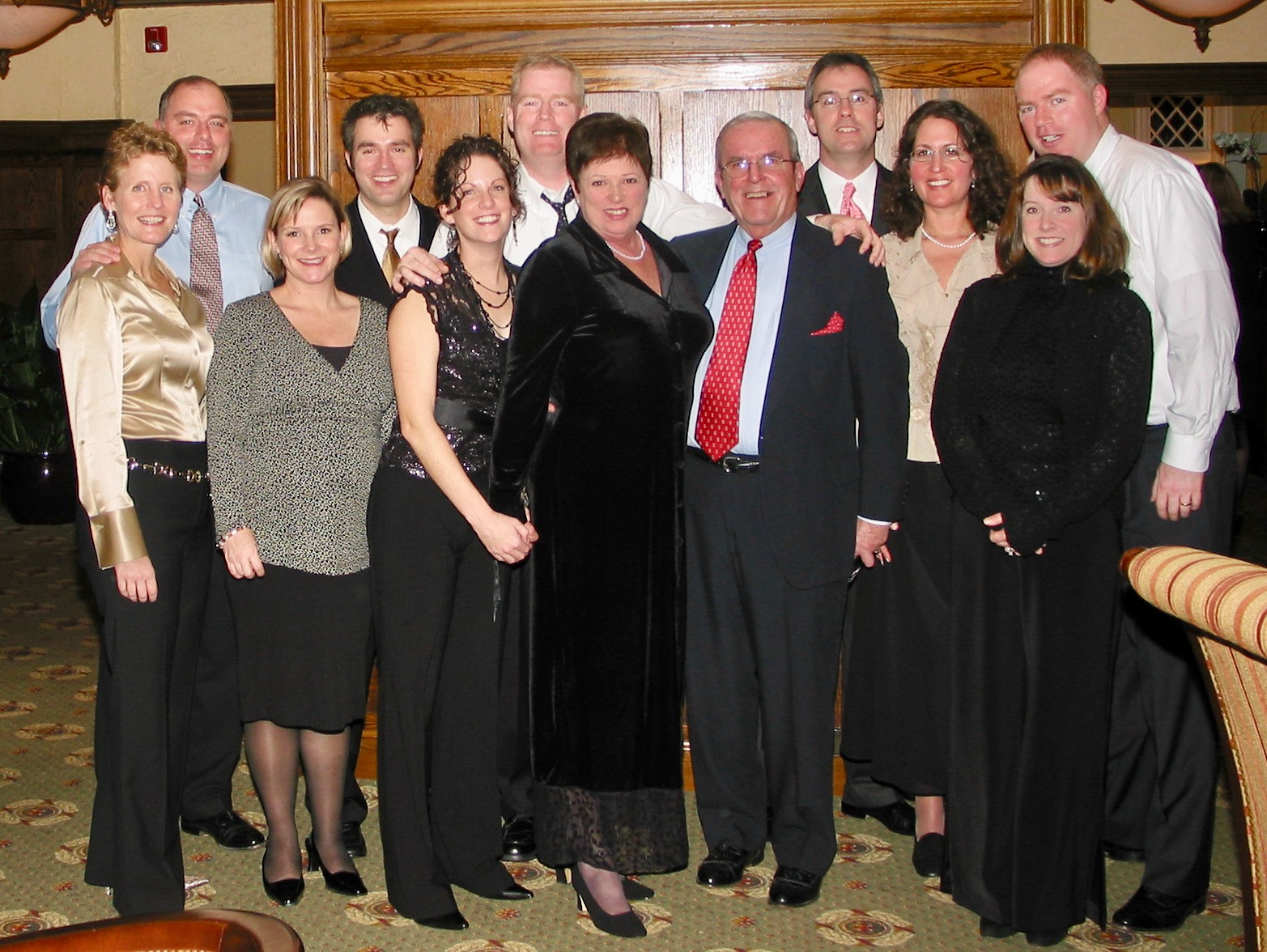
 

Looking back over the last 30-plus years, I’m hard-pressed to recall even a single tiff Tom and I had after I started law school in August 1990. He and my mother had a lot of good times together, and they both relished their roles as grandparents to eighteen grandchildren.


About six years ago, Tom moved into a nursing home in west suburban Wheaton. My mother followed roughly a year later.


Until the pandemic hit, I did my best to get out there once a week to visit and to play music for them and their fellow residents. And whenever the nursing home could come up with a little bit of money, I’d bring with me some of my professional musician friends to class up my act.


Tom was a keen listener, and he would often ask me about certain songs as I packed up my equipment. One song that he quickly took to was “The Dutchman,” which has long been a favorite of mine.


It’s a song about a man (“the Dutchman”) who is growing old, losing his faculties, and being cared for by a woman named Margaret, who loves him deeply.


It was always a tough one for me to sing at the nursing home because I was playing it in front of my mom and Tom, both of whose minds and bodies were beginning to fail.


But Tom continued to request the song, and it dawned on me later that his attachment to it might have had something to do with the fact that for many years he called my mother (whose name is Eileen) Margaret.


It was a nickname that grew out of a vacation they took together back in the late 1990s. My mom and Tom evidently spent some time with a guy in Florida who incessantly summoned his own wife (whose name was Margaret) with braying demands for her attention. “Margaret, come over here.” “Margaret, I need my glasses.” “Margaret, what time is dinner?”


My mom and Tom must have found this amusing, because after returning home from their trip, Tom often called my mother Margaret, and she unfailingly answered to that nickname.


Tom passed away a few months ago, and the Sweeney family recently hosted a Celebration of Life event for him. I asked Tom’s oldest son if I could play a song at the event, and he graciously agreed. I told the folks who gathered that afternoon the story of Tom and “The Dutchman,” and I then played the song.


Given that my mother, who still resides at the nursing home, doesn’t remember much these days, it was especially tough to get through the chorus, which ends with the line, “Long ago I used to be a young man, and dear Margaret remembers that for me.”


Since I had, on several occasions, played that song at the nursing home with my good buddy (and ace guitarist) Steve Doyle, I recently talked Stevie into recording a version with me in my basement as a musical tribute to Tom Sweeney. 


Tom was the dad 22-year-old me didn’t need, but 59-year-old me is happy to have had for over 35 years.


And despite our many youthful clashes with him, Tom quickly figured out that he could always count on the Farmer boys.

Saturday, July 22, 2023

I Tried To Break Into George Blanda's Car

[This piece was originally published at The Beachwood Reporter website on September 28, 2010.]

You want to know what went through my mind when I heard that NFL legend George Blanda had passed away on Monday?  It wasn’t the 41-yard field goal he kicked at age 48 in the AFC Championship Game in January 1976. And it wasn’t the 2,002 career points he racked up during his twenty-six years in the league.  Truth be told, my first thought had nothing to do with football.

I flashed back to the time that he caught me breaking into his car.

I was a fifteen-year-old caddie at Butterfield Country Club, where Blanda played golf.  It was a hot summer afternoon, and I’d already come in off the course.  My friends and I were sitting outside the caddyshack waiting to get paid and sent home for the day.  A few of us decided to kill some time by shooting baskets at an old hoop in the southwest corner of the club’s parking lot.  Most of the time, the members knew enough to park their cars far away from our makeshift court.

On this particular day, however, an off-white sedan (a Chrysler Cordoba, if I remember correctly) was parked about ten feet to the right of our imaginary free throw lane.  The car narrowed our court’s dimensions, but my friends and I decided to play some three-on-three just the same.

One of my buddies wore glasses when he caddied, but he’d been in enough of these hoop games to know that his specs would likely get broken if he wore them while we played.  Rather than run back to the shack to stash his glasses, he walked over to that sedan.  The driver had left his front window partially rolled down to keep the car cool, and my friend decided to hook his glasses over that open window.

About fifteen minutes into our game, I somehow managed to knock those glasses off of the window and into the car.  They landed on the front seat, touching down on what I assume was probably “soft Corinthian leather.”  The car, of course, was locked.

My buddy panicked, but I told him to relax.  I tracked down a coat hanger and began trying to pop the lock on the front door.  While trying to get the door open, I couldn’t help but notice what was lodged in the car’s 8-track player.  It was “Go West” by the Village People.  I’d recently attended Disco Demolition Night at Comiskey Park, so this little discovery didn’t sit well with me.

In any event, while I was fooling with the hanger, I had no idea that the car’s owner was walking through the parking lot.  And, yes, the owner turned out to be George Blanda.   When Blanda saw me poking around his window, he began yelling from across the lot.  

Remember -- this guy had only been out of the NFL a few years and his right arm probably weighed more than I did.  I got nervous in a hurry.

I tried to explain to him what I was doing, but he didn’t want to hear it.  He brought me over to the caddie master and told him that he’d found me with a hanger trying to get into his car.  

I paid the price.  For the next three or four days, the only golf bags I was assigned to carry were ones belonging to parsimonious priests or penny-pinching widows.

A few years later, when I was one of the more senior caddies, we did manage to have some fun with Blanda.  He’d always been a good golfer -- close to scratch -- but he was well known for having a hot temper on the course.  He threw golf clubs like they were footballs.

After one particularly ugly round, one of the older caddies came up with a plan to get Blanda to break his club-throwing habit.  Caddies generally wear baseball hats or visors on the golf course.  This plan involved a slight twist on that traditional headgear.  The older caddies agreed that for the next several weeks, Blanda’s caddie -- no matter which of us it was -- would wear a yellow construction hard-hat throughout the round.  The members, including Blanda, eventually figured out what was going on.  I think the hard-hat routine actually improved his disposition on the golf course.

I’ll let the folks on sports talk radio dissect his amazing football career.  All I’ll say -- as someone who once tried to break into his car -- is that he was a nice guy (with at least one bad 8-track tape), he generally kept the ball in the fairway, and he tipped his caddies pretty well.  Rest in peace, Mr. Blanda.

Sunday, June 12, 2022

Bishop Rooks Pawn

(This piece was originally posted at "The Third City" blog on November 10, 2013)

I’ve practiced law in Chicago for twenty years. Before starting down that career path, I spent about a dozen years working as a golf caddie.

Caddying was, hands down, the best job I ever had -- so much so that I still can’t kick the looping life entirely. I last carried a bag just two months ago at the BMW Championship Pro-Am at Conway Farms Golf Club.

Movies about lawyers are a dime a dozen, but I’ve yet to see one that accurately captures the big-city law firm experience. Movies about caddies, however, you can count on one hand, and crazy as it may seem, Caddyshack tells it like it is.

It captured my caddie experience in spades: grew up in a big Irish family; won the caddie tournament (once); won the caddie scholarship; enjoyed an abbreviated "caddie swim" on off-days; looped for doctors, judges, CEOs, real estate developers, clergy, etc.

And by the end of my caddie career, I could even relate to some of the seemingly far-fetched scenes from the film.

Remember, for example, when a pitchfork-wielding Bill Murray delivered his wholly improvised monologue about the big-hitting Dalai Lama? Murray explained how the Lama had tipped him at the end of the round not with cash, but with the promise of "total consciousness."

Hell, I once caddied for a Roman Catholic bishop back in the mid-1980s and His Excellency, for all practical purposes, ran the same "Oh, uh, there won’t be any money" game on me.

That particular deal went down in the south end of the parking lot of Butterfield Country Club, just as His Mediocrity (I’m referring only to his golf game, of course) popped the trunk of his black Cadillac so I could put his sticks in the car.

The bishop had played the course earlier that day as a guest of one of the club’s members, and the parking lot was the place where I always had the best chance of scoring a post-round tip from the guest whose bag I’d just carried.

Why the parking lot?

If things went according to plan, I always had my golfer one-on-one by the time we made it out to the lot. That way, there wasn’t a member around to run interference by saying, "Don’t worry about Matt – I’ll take care of him when we get inside."

And that’s how it played out with the bishop. It was just the two of us on the blacktop exchanging some final pleasantries -- the young caddie and the old guy who drove a new Caddie.

Time to close the deal.

The bishop and I had talked plenty while we were out on the course together that afternoon, but at no point during the round did he and I discuss my religious background. (I’d graduated from a nearby Catholic high school a few years earlier.) As a result, he had no idea whether I played for his team on Sunday mornings or suited up with Xenu, Travolta and the Thetans.

But none of that mattered to His Thriftiness once he opened his wallet to give me my tip.

The man simply handed me three holy cards and sent me on my way.

Three holy cards.

For those of you who didn’t grow up Catholic, picture a baseball card. Now replace the photo of the third baseman on the front of that card with a painting of a third-century martyr. Swap out the player’s stats on the back of the card for a prayer.

Repeat that exercise two more times and you’ve got my tip from the bishop for a round of golf.

"So I’ve got that goin’ for me . . . which is nice."

Monday, February 8, 2021

Karen Lewis: A Force of Nature

Yes, Karen Lewis could be tough as nails at the bargaining table. And, yes, she delivered fiery speeches that inspired hundreds of thousands of teachers and students around the country. But the woman could also work a charm offensive with the best of the bunch. 

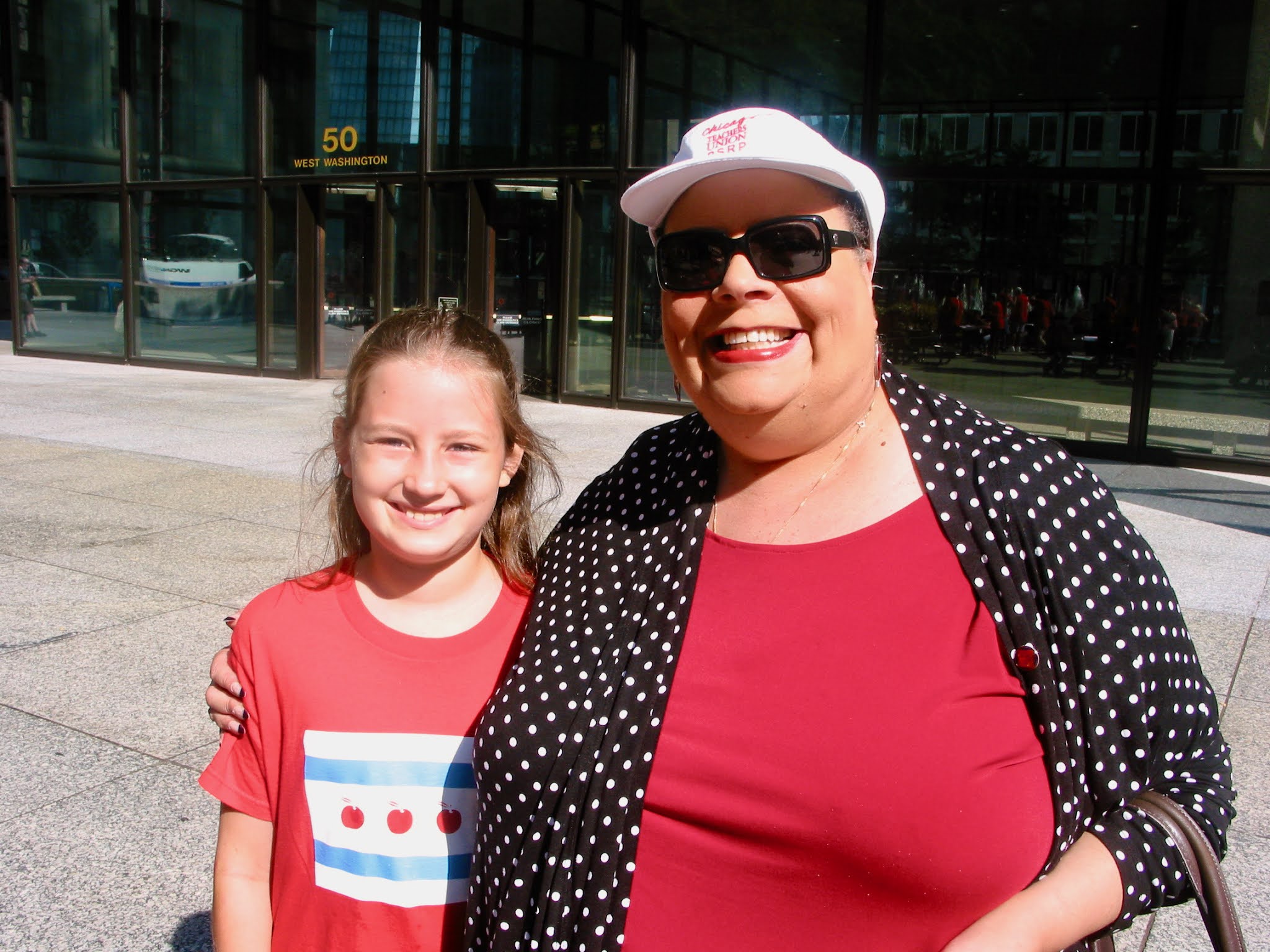
My youngest child with The People's Champ in 2012.

I should know. She successfully worked one on me in 2011, and my life will be forever enriched by her friendship, passion, and humor.  


The message that appeared in my Facebook Messenger inbox on December 22, 2011 was unusual (to say the least), because I’d never before met the sender. I had, however, read plenty about her in local newspapers since mid-2010, when she became president of the Chicago Teachers Union.


Back then, I was still a Chicago Public Schools parent, I served on a local school council, and I wrote semi-regular pieces about public education for The Huffington Post


I also knew that the CTU, in November 2011, had just begun the process of negotiating a new contract with CPS. And Karen, like any good leader, wanted to build citywide support for her members, who would soon find themselves pitted in an existential struggle against newly-elected Mayor Rahm Emanuel and his recent hires.


So, of course, I took the bait in December 2011, when Karen reached out to me, in her own inimitable style, with this charming invitation to meet: “I am truly, madly deeply in love with your soul. May I buy you lunch early next year?”

It's Just Lunch.

Best lunch meeting I ever took. We hit it off immediately.


Karen was funny as hell (she’d done some stand-up comedy in the past). Like me, she was an absolute music geek. And when it came to caring about students and teachers, she took a back seat to no one.


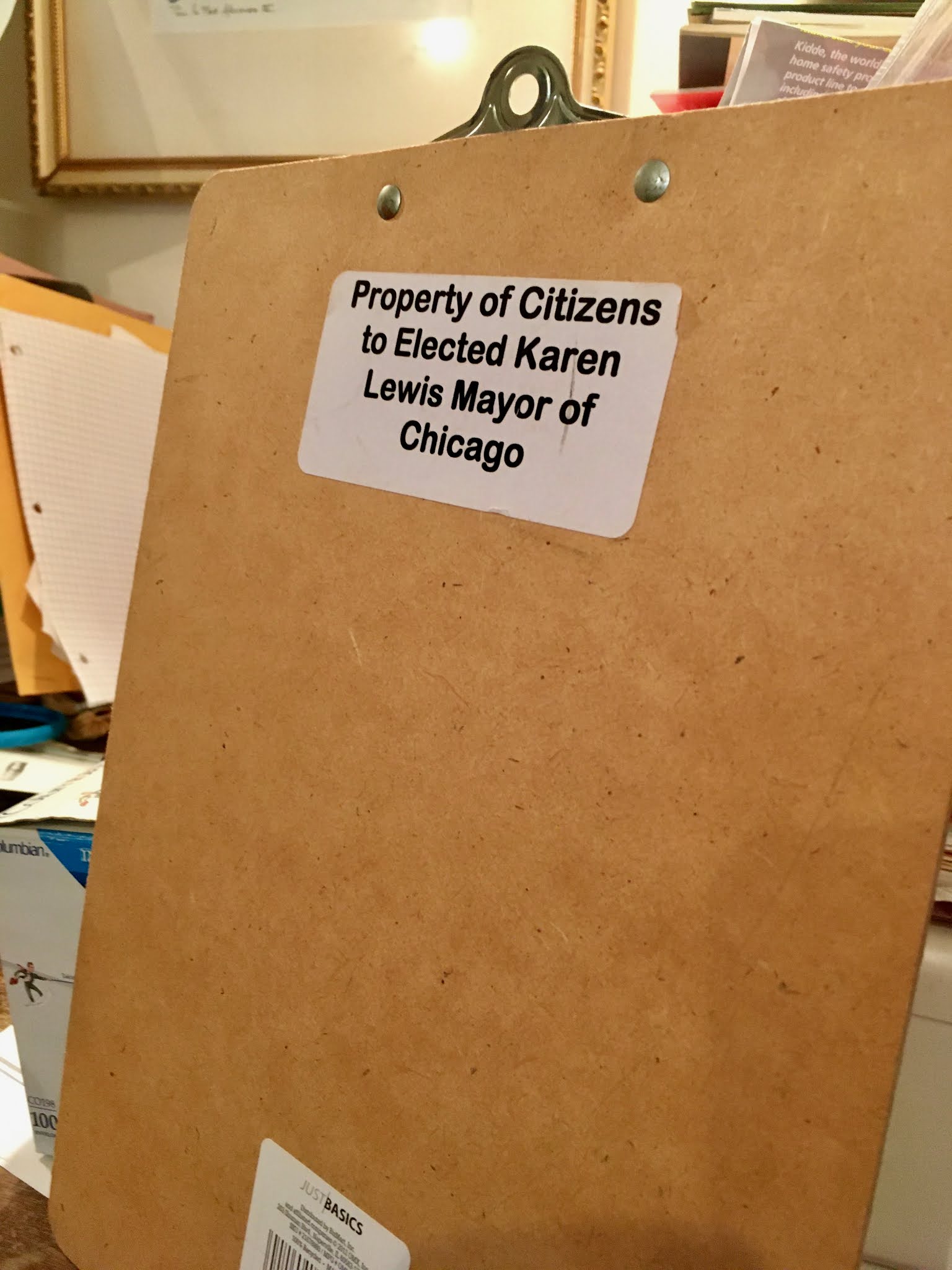
I was honored to attend her bat mitzvah in June 2013, and I was proud to go door-to-door fifteen months later to circulate petitions for her brief mayoral run, which was quickly derailed by an October 2014 brain cancer diagnosis.


A clipboard for the ages.

I last spoke with Karen on the morning of October 1, 2020, when she called just to say hello and to see how my family and I were doing during the pandemic.


Over the next few days, both the local and national media will revisit Karen’s role as a labor leader and an unwavering advocate for public education. She was a force of nature.


I’ll miss a friend who loved to talk not only about politics and education, but also about folks like Art Tatum and Bud Powell.


My heart goes out to Karen’s husband, John, another gem of a human being.

Monday, January 18, 2021

(Who's Gonna) Pardon Me?

On Thanksgiving Day, I channeled the sitting president just long enough to pose the musical question, "(Who's Gonna) Pardon Me?" In less than 48 hours, we should have our answer. Until then, enjoy the song, which features my good buddy Stevie Doyle on the Telecaster.  

(WHO'S GONNA) PARDON ME? 

[Matt Famer]

It’s lonely here in the bunker 

As I make my final stand 

Eatin’ KFC and watchin’ Hannity 

And tryin’ to save the family brand 

The numbers don’t look good for me 

Oh, but who’s to say what’s real 

And if Rudy G. cries “conspiracy” 

We can stop the whole damn deal 


So here’s to those emoluments 

That keep my family fed 

And to all those Confederate monuments 

That keep the South so red 

Here’s to Clorox bleach and UV rays 

And a spineless GOP 

It’s the end of the show, and I still don’t know 

Who’s gonna pardon me? 


I’ll play every last card I’m holding 

And then I’ll burn the whole place down 

It’s all about me, not democracy 

No, you’ll never take my crown 

But when they pull me out of this bunker, Lord 

And I know someday they will 

Well, I’ll make do like it’s World War II 

And maybe hang out in Brazil 


So here’s to those emoluments 

That keep my family fed 

And to all those Confederate monuments 

That keep the South so red 

Here’s to Clorox bleach and UV rays 

And a spineless GOP 

It’s the end of the show, and I still don’t know 

Who’s gonna pardon me? 

I won’t wear a mask, but I still gotta ask 

Who’s gonna pardon me? 

Pence ain’t around, and it’s bringin’ me down 

Who’s gonna pardon me?

Thursday, November 1, 2018

One After 909 (West Armitage)

(On October 22, the Old Town School of Folk Music announced plans to sell its building at 909 W. Armitage Avenue. Set out below is a letter I sent Bau Graves, the school's executive director, on November 1.)

Dear Mr. Graves,

Last week, while sitting at my desk paying bills, I came across an October missive from the Old Town School of Folk Music asking me to renew my membership, which was about to expire. I’ve been a member of the school for over a decade, and it is, hands down, one of my favorite places in Chicago. (To give you some idea how often I visit the school, I shopped at Different Strummer earlier this week, and I have tickets for a concert at the school next week.)

When it comes to supporting the school, I know I’m just a little guy. The modest check I send every year pales in comparison to the dollars you and your colleagues raise from the city’s movers and shakers – individuals whose surnames are frequently followed by the word “Foundation.”

I write today simply to tell you why I’m not yet ready to renew my membership.

You’ve now been working in Chicago as the Old Town School's executive director for over a decade, so I’ll assume you have some level of familiarity with Mayor Emanuel’s decision to close more than 50 of the city’s public schools back in 2013. As a Chicago Public Schools parent who paid close attention to that process – I was one of the lawyers who challenged the closings in federal court – I continue to believe the mayor and and his hand-picked board were their own worst enemies. Yes, they got what they wanted in the short term, but the heavy-handed, top-down style with which they pursued their agenda caused a lot of collateral damage – institutional damage that has not yet been repaired.

Learn from their mistakes.

From where I sit, I view the Old Town School’s faculty as the heart and soul of your operation. I’m honored to count many of your teachers among my close friends and favorite people with whom to play music. Make no mistake, you blindsided them with the October 22 announcement that you are selling the building at 909 W. Armitage, and (from what I can tell) your rollout of that decision has not helped faculty morale.

The wise man knows what he does not know, and I certainly have no idea whether your decision to sell the Armitage building makes sense for the school and its long-term health. What I do know is that you’ve left a lot of my friends wondering whether they’ll have jobs next year. Unlike you, my friends didn’t enjoy spectacular increases in their Old Town School compensation between 2009 and 2016. A lot of them scramble each year just to find medical insurance.

Your accountants may view those guitar, voice, and piano teachers as fungible faculty members who are nothing more than line items on the school’s balance sheet, but you’ll be making a great mistake if you ignore their voices the next time you and your board members make a significant decision about the school’s future.

I’ll wait a few weeks to see how things shake out at the Old Town School, but in the interim, I’ll send the check I usually send your way to the nearby People’s Music School in Uptown. I’m confident the late Woody Guthrie would understand my decision.

Sincerely,
Matt Farmer

Sunday, April 22, 2018

Whitey O'Day: A Remembrance

“Matt, I’m having trouble remembering how to play a C chord on my guitar. Where do I put my first two fingers? And can you remind me how the first verse of King Of The Road goes?” When my cell phone rang on a Saturday afternoon last July, and I saw that it was my old friend Whitey O’Day calling, I did not expect our conversation to begin with those questions.

After all, when I first met Whitey, in a Lincoln Park tavern in the fall of 1982, I watched him hold a Saturday night barroom crowd in the palm of his hand, using only his acoustic guitar, his encyclopedic knowledge of old songs, and (of course) his captivating charm and wit.

I was a sophomore at Northwestern University at that time. I’d not yet started playing guitar, but I was already a music geek, who spent way too much time and money in local record stores. Walking into that bar in 1982 with several of my college buddies, I had no idea I was about to begin a friendship that would last 35 years, much less one that would inspire me to become an occasional barroom singer.

What I quickly figured out that night from my table ten feet from the stage at Irish Eyes was that Whitey O’Day knew how to work a room. He wasn’t a virtuoso guitarist, and he didn’t possess an other-worldly vocal range, but he definitely had a gift, and it was a gift I watched him employ reflexively at bars, festivals, and private parties over the years, even after recent health issues triggered a decline in his music skills.

If you were in the crowd at one of Whitey's gigs, he’d always make it a point to say hello during a break. He’d also remember your name, and he’d ask whether there was something he could play for you. If he knew the song you requested (usually a safe bet), he’d hit it early in the next set, and he’d generally give you a nod in the process: “Let’s do one for Jim over there, who wants to hear something by the late Don Gibson . . . “

And you could take it to the bank that the next time Jim wandered into one of Whitey’s gigs, Whitey would remember him: “Jim, good to see you, my friend; we’ll have to do some Don Gibson for you in a few minutes.”

And that, from my perspective, was the magic of Whitey O’Day. He made people feel at home in a tavern by making sure there was no wall between him and his audience. He was able to do that because he was a genuinely nice guy, who enjoyed the challenge of making a friend out of every stranger who entered the bar.

After my first night at Irish Eyes, my college friends and I continued to make the occasional pilgrimage to Lincoln Park to see Whitey. To eliminate our CTA commute, however, I made it a point to book some gigs for him on campus. He appreciated the work, and he and I often ended up grabbing a post-gig breakfast at 2 a.m. at a nearby pancake house. It was during those late-night chats that we got to know each other a little better.

About a year after I finished college, I told Whitey I’d recently started playing guitar. I’d been learning on a friend’s instrument, but I was now in the market for one of my own. As it turned out, Whitey was looking to unload one of his guitars, and he gave me a great deal on an Ovation Legend, which I played for many years.

In the mid-1990s, after I felt comfortable playing and singing in front of people, Whitey invited me to play a few tunes during a break at one of his gigs. I greatly appreciated that opportunity. I must have held my own that night because after my first mini-performance, he always invited me back to the stage, whenever I popped in to see him.

Years later, I began playing gigs of my own, eventually getting to work with some incredibly talented Chicago musicians. At that point, if Whitey had a night off and I had a gig, he’d frequently stop by and sit in, and I always got a big kick out of that. Unlike me, Whitey worked primarily as a solo act. And I’m confident he loved sitting in with me because it meant he’d be accompanied by my buddy Steve Doyle (pictured below, blonde Telecaster in hand), one of the city’s best guitar players, on whatever old tunes he sang for my crowd. Whitey absolutely loved Steve’s playing.

The years eventually caught up with Whitey, as they do with all of us. Problems with his feet made it difficult for him to walk and even more difficult for him to lug musical equipment, but it was a pair of recent strokes that made it increasingly hard for Whitey to do what he really loved to do — play and sing for people on barstools.

After his second stroke, in April 2017, I stopped by the Glenview rehab facility where he was staying. I brought a guitar with me because I wanted to test his memory and his motor skills. (After his first stroke, he began playing gigs with a songbook; the lyrics that had always been second nature to him were no longer on the tip of his tongue.) I wheeled him out of his room and down to the building’s lobby. We set up shop in a corner, I played my guitar — he was unable to do so — and we sang. I called out songs that he’d sung thousands of times before. At first, we kept our volume low. Finally, I said, “The hell with it, Whitey; let’s do this like we mean it.”

At that, he and I began singing like we were again entertaining at a local bar. The lyrics occasionally escaped him, but Whitey and I soldiered on, as patients and their families quickly gathered around to listen. They applauded and requested songs. We played and sang for almost an hour, and Whitey had a smile on his face throughout the afternoon. Over the next few months, he told me many times how much that day meant to him. I told him that I always enjoyed the opportunity to play music with him.

Then came the July phone conversation during which it became clear to me that Whitey’s guitar playing days were likely over. When he told me he couldn’t remember how to finger a C chord or sing King Of The Road, I told him not to worry. Recovery takes time, I said. It was only then that he explained he’d booked a three-hour gig at Hackney’s for the following week. Whitey had been playing at Hackney’s since Reagan was in the White House, and now that he was out of rehab he wanted to start working again.

Given our conversation that day, I knew he’d have trouble with even a fifteen-minute gig. I asked him if he’d like me to accompany him at Hackney’s. That way, he wouldn’t have to worry about playing the guitar, and he could focus on his singing and on his (still-adoring) fans. He told me that would be a big help. I brought my PA system because I didn’t want him to have to carry anything.

We ham-and-egged our way through the gig, but it was tough for me to see my friend struggle that night to do what he’d done so well for decades. We talked at length several times over the next few weeks about some strategies for relearning the guitar.

I did my last Hackney’s gig with him in January 2018, and it was a rough night. Whitey desperately wanted to be back on the circuit, picking and singing for his longtime friends and fans, but his battered body did not want to cooperate.

Whitey passed away on Saturday, April 21. He was 76 years old. There won’t be a gig I play, right up to the time someone takes the guitar out of my hands, when I don’t think of Whitey.

See you on the ice, brother.

Saturday, May 6, 2017

Memorial Day Weekend Music

Our friends at McKellin's Pub are celebrating the bar's 19th anniversary over Memorial Day weekend, and I've recruited a couple of my favorite music-making compadres to help me keep things jumping at the tavern on Sunday, May 28.


Steve Doyle, Lisa DeRosia, and I recently joined forces to pay musical tribute to Kellyanne Conway and her equally fact-challenged boss. Check it out.


Alternative Facts
(M. Farmer)

Well, two plus two is five
Frederick Douglass is still alive
Vladimir Putin had nothing
To do with those hacks
Alternative facts

I was quick to condemn the Ku Klux Klan
My executive order's not a Muslim ban
They were clapping in New Jersey 
For the 9/11 attacks
Alternative facts

BRIDGE
I’ll tell you up is down and black is white
And every little thing is gonna be alt-right
The truth is gonna be whatever I say
Call me Mango Mussolini
Or just Il Duce

I really care about working class folks
Global warming is a Chinese hoax
3 Doors Down is one of our greatest
Rock-n-roll acts
Alternative facts

You know Mexico is gonna pay for that wall
My great big hands can palm a basketball
And when my audit's done
I'll tell you what I paid in tax
Alternative facts

BRIDGE
I’ll tell you up is down and black is white
And every little thing is gonna be alt-right
The truth is gonna be whatever I say
Call me Mango Mussolini
Or just Il Duce

My thoughts and prayers go out to Bowling Green
I'm the least racist person that you've ever seen
I've always had a great relationship
With the blacks
Alternative facts

I've got a real good handle on foreign affairs
We need guns in our schools to kill grizzly bears
And you know Kellyanne is the queen
Of the mendacious flacks
Alternative facts

Sunday, February 12, 2017

Donald J. Twitter


Some folks spent January 1, 2017 nursing hangovers and watching college football. I spent it writing a song about Donald J. Trump and his increasingly dangerous Twitter habit.

My song, Donald J. Twitter, failed to land me a spot on the bill with 3 Doors Down and Jackie Evancho at Trump’s incredibly well-attended, record-breaking inauguration, but I have been able to perform it live from time to time in The Annoyance Theatre's ongoing production of Fuck Trump: A Collection of Songs to Demonstrate What a Horrible Person Donald Trump Is.

So I got that goin' for me, which is nice.


DONALD J. TWITTER
(M. Farmer)

CHORUS
Hey, Kellyanne, give me my phone
I’m gonna need some time alone
You know I always do my best work on the shitter
And I don’t need Meet the Press or my own Gettysburg Address
When I can climb upon my throne
And get on Twitter

VERSE
Let’s go to @realdonaldtrump
Where my old brain can take a dump
And talk about the issues of the day
From pathetic SNL to amazing Israel
When I’m on the stump
Just watch me fire away

You know it’s anybody’s guess
As to when some global mess
Is gonna overwhelm my short attention span
Oh, but I’ll be there to tweet; I’ve gotta give my base red meat
That is unless
I switch to Instagram

REPEAT CHORUS

VERSE
Well, my favorite way to tweet
Is to pick on some elite
And call him lots of kindergarten names
If he’s a third-rate loser clown, well, that’s the way I’ll take him down
Just bring the heat
Until he goes up in flames

And women ain’t immune
From the wrath of this tycoon
I’ve got 140 characters of hate
So if some beauty queen gets fat, I don’t grab her by the cat
I just lampoon
Her ever-changing weight

REPEAT CHORUS x2

Tuesday, November 8, 2016

Takin' It to the Streets

My 14-year-old daughter still wonders why her old man -- a cranky, gray-haired lawyer -- enjoys spending the occasional Saturday or Sunday morning busking on the streets of Chicago. I do it, I tell her, because I enjoy making music, meeting interesting people, and regularly stumbling into situations that ultimately make for great stories. I don't have a head of hair like I did 25 years ago, when I often played music on the corner of Belmont and Broadway, but my voice and my guitar playing have improved over time.

Chopping changes on a busy Chicago corner in 1990


So, too, have my busking-related stories.

It was just last year, for example, while playing my guitar and singing on a lovely spring afternoon near the corner of Michigan and Erie, that I ended up lecturing -- guitar in hand, mind you -- a group of unsuspecting Northwestern University law students, who almost certainly had me pegged as a broken-down, peripatetic minstrel, hustling for lunch money on the Magnificent Mile.

My current musical antics now have me following in the footsteps of my oldest daughter (now almost 25), who, as a high school student, acted and sang in The Annoyance Theatre's 2010 production of "40 Whacks," a dark musical comedy about the Lizzie Borden axe murders. When your high school kid lands a role in an Annoyance production, rest assured yours is a twisted kid. And I, of course, wouldn't have it any other way.


A young Chelsea Farmer, as Bridget, the Bordens' Irish maid


Which is why I, the equally twisted father, was thrilled, some six years later, to end up playing and singing on the Annoyance stage. And the only reason it happened was because I continued hitting the streets with my guitar.

Flash back to September 18. I was playing music outdoors in Lincoln Square. At some point during my roughly two-hour set, I sang "Trump's America," a cautionary tale I'd written and recorded about Donald J. Trump back in March. A couple of passersby introduced themselves and told me how much they enjoyed the song. Those folks were Mick Napier, founder and artistic director of The Annoyance, and Jennifer Estlin, actress and executive director of that same Chicago comedy institution. Mick also told me that he'd just opened a new show at The Annoyance. The show, he said, was called "Fuck Trump: A Collection of Songs to Demonstrate What a Horrible Person Donald Trump Is."

I thanked both Mick and Jennifer for their kind words, and then I told them that I had an Annoyance connection. I was Chelsea Farmer's dad.

They laughed, said a lot of nice things about my kid, and we exchanged contact information. We also talked generally about finding a time for me to play my song during the new Annoyance show.

A few weeks later, I wrote a second Trump tune, "Tic Tac Trump." With the second song in the can, I connected, via email, with Mick and Jennifer, and we nailed down a time for me to play some music in their show.

And since my buddy Steve Doyle played outstanding electric guitar on each of my Trump tunes, I made sure that I would hit the Annoyance stage on a night that he was able to join me. I also know that Steve is good friends with (and an occasional bandmate of) Lisa McQueen, music director at The Annoyance. And to demonstrate just how small the world is, my friend Al Rose, a great Chicago singer-songwriter who also works regularly with our mutual buddy Steve Doyle in his own first-rate band, not only contributed songs to "Fuck Trump," but is also a member of the show's cast.

Having worked out the scheduling details with the powers-that-be, I first hit the stage with Steve last Friday night to perform "Tic Tac Trump" at the end of the show. It was a blast. We did it again on Monday night, and that night Steve was also able to sit in on the songs that Al sings during the show.

This Friday night, which could possibly turn out to be Night Three of my four-year membership in the Loyal Opposition, I will be filling in for Al, who, along with Steve, will be opening for David Bromberg at the Old Town School of Folk Music.

What this means for me is that I'll kick off the Annoyance show on what I assume will be its final night. Al ordinarily does the first song of the show. This weekend, however, that task will fall to me. After the opening number, I'll obviously race back to the green room for some cold cuts and amphetamines while regrouping for my next song 15 minutes later.

Come Monday, I'll ditch my guitar for a few days, don a suit and tie, and resume a bench trial in the Circuit Court of Cook County.

Life is for living, my friends, and not even a Trump presidency will change that.

Thursday, September 8, 2016

Farewell to a Friend of the Working Man

The sleep was still in my eyes this morning when I learned that my friend Marv Gittler had passed away just a few hours into the new day. Marv was 77 years old.


The Chicago Sun-Times has already posted a thoughtful obituary for the man the paper rightly called a “prominent Chicago labor lawyer,” but when I heard the news about Marv’s passing today, the first thing that popped into my head was the nationally televised Bears-Seahawks game in October 2006.

Marv took me to a lot of Bears games over the years, and no matter how poorly the Bears played — and we sat through some awful games together — he and I always had a blast.

But early into the 2006 season, as the Bears were working their way back to the Super Bowl, Marv realized he had a conflict with the Week 4 game against Seattle. The night game fell on Yom Kippur, and Marv was going to be at temple with his family.

And since I'm the token Irish guy who, years earlier, had married into a big Jewish family (of which Marv was the de facto patriarch), he called me to see if I wanted his tickets to watch the still-undefeated Bears take on the formidable Seahawks. I told him I’d love to go, and he told me he’d have the tickets delivered to my office.

When the envelope arrived a few hours later, I opened it. Yes, the tickets were inside, but so, too, was a stern, handwritten admonition from Marv: "We're on a roll -- Don't fuck it up!"


It's ten years later and I still have his note. It's classic Marv Gittler.

A few weeks after that Bears victory over Seattle, the young-at-heart Marv and Carol Gittler were, as I recall, the only senior citizens hanging out at the Empty Bottle to hear me play music with my friends The Hoyle Brothers.


That same year, when my mug appeared on the front page of the Business section of the Wall Street Journal, Marv had the article framed and sent over to my office.

And I still have the note Marv sent me the following year, when he came across a story in the Illinois Labor History Society Reporter about my oldest daughter, who was then a student at Lincoln Park High School. My kid had fared well nationally in a 2007 history competition with her one-woman show about organized labor and the Memorial Day Massacre of 1937. Marv, who was excited to see that a kid he knew was digging into labor history, took the time to send me the story along with a note: "Please tell Chelsea how proud I am."


When one of my family members went through some major medical challenges more than a decade ago, Marv met me for one of our many dinners together at Greek Islands (a favorite haunt of his), handed me a roll of cash during the meal, and told me to call him if we needed anything at all.

I could go on and on with these stories, and I've only known Marv since the late 1990s.

In May 2012, I was having lunch with CTU president Karen Lewis. She had asked me to speak, as a CPS parent, to thousands of teachers at an old-fashioned labor rally that was going to be held the next day at the Auditorium Theatre. While Karen and I were discussing the rally and the possibility of a strike that fall, I told her it would mean a lot to me if she would see fit to let Marv, who did not represent the CTU, crash her union's rally so that he could hear me speak.

Turns out Karen and Marv were members of the same temple in Hyde Park (Marv and I sat in the same pew at Karen's bat mitzvah in 2013), so Karen and I phoned Marv from the restaurant, invited him to the rally, and the next day Marv had a seat just a few feet from the stage.

I was thrilled to be able to share a bit of my hell-raising on behalf of workers with a guy who'd been doing it for more years than I'd been alive.


Dementia is a bitch, and when it hits a guy with a legal mind and a sense of humor like Marv's, it's doubly painful.

Last year, when Marv's deteriorating condition required him to retire, his firm threw him a party.


Jim Franczek, one of Marv's closest friends, who also happens to be a management-side labor lawyer from another Chicago firm, gave a heartfelt talk at that party about his old pal, and it brought tears to my eyes.

I got to know Jim when he and I tried a federal case against each other in 2013. His client, the Chicago Board of Education, was trying to close more than 50 public schools; my clients, two groups of students who would be adversely affected by those closings, opposed that decision.

Jim figured out early on that Marv and I were tight, and Jim and I got along well during the trial, and we still do today. As a lawyer, I try to follow the example set by Jim and Marv over the decades. Represent your clients zealously, but do your best to get along with the lawyers on the other side of the table.

The last time I saw Marv alive was on Sunday, August 28, at his home in Union Pier, Michigan. His wife, Carol, was next to him, along with several of their terrific daughters and grandkids.

Across the table from Marv, once again, was his longtime labor adversary and longtime friend Jim Franczek, along with his wife, Debbie.

Marv seemed to be at peace.

I'll miss you, buddy.

Saturday, March 12, 2016

Trump's America


Dear Chicago Protesters,

Sorry I couldn't be with you yesterday at the University of Illinois at Chicago to "greet" Donald Trump, but I was stuck taking a deposition that had been scheduled weeks earlier. In any event, congratulations to all of you for letting Mr. Trump know that his race-baiting and bullying won't fly in Chicago.

After I got home last night, I caught the tail-end of the UIC event on CNN. An hour later, I began recording this song, which I had started writing earlier in the week. My good buddy and longtime music compadre Steve Doyle took time out of his busy Saturday morning to lay down his electric guitar track. (Thank you, brother.)

The spark for this song comes from Mr. Trump's tired slogan -- recycled from a Reagan campaign -- "Make America Great Again."

Whenever I hear that line, I ask myself what period of greatness Mr. Trump wants us to revisit? The Ozzie & Harriet years? The Reagan era? The Dred Scott days?

Those were tough stretches for entire groups of Americans who simply happened to have the "wrong" color skin, the "wrong" ethnic background, or the "wrong" sexual orientation. But what the hell, every candidate needs a slogan.

Again, thanks for filling the streets last night, Chicago. I hope you enjoy my song.

In solidarity,

Matt Farmer


Trump's America
(M. Farmer)

In a Trump t-shirt and a bright red hat
He stopped me outside of the laundromat
And said, "Howdy, brother, would you like to join our fight?"

He said, "We need to take this country back
From those godless gays and the brown and the black,
Can you help Mr. Trump as he tries to make things right?

"He's gonna build our nation a great big wall
And get Mexico to pay for it all
'Cause he's a businessman who knows how to get things done

"He’ll keep out the drugs and Mexican rapists
ISIS thugs and no-‘count papists
And make America safe for everyone”

And then that man in the red hat looked me straight in the eye and said, “Are you with us, brother? Will you help Mr. Trump make America great again?"

Well, I could barely contain myself, but I paused, took a deep breath, gathered my thoughts . . . and then I asked him a couple of questions . . .


Before you make America great again
Can you take a moment and remind me when
That greatness stretched from sea to shining sea?

‘Cause I know all about the Jim Crow years,
The Stonewall raid, and the Trail of Tears
And the strange fruit hanging from a poplar tree

Was our country really at its best
When internment camps filled the Great Northwest
Or when old man Daley busted heads back in ’68?

This nation's always worked well for some
But it’ll never be great for everyone
If it’s run by a man who encourages fear and hate

Well, that threw him for a loop
But truth be told, I was just getting started . . .


I said your man’s a bully and a carnival barker
Peddlin' fear of folks whose skin’s a bit darker
Than that crazy shade of orange that he likes to wear

Sellin’ Trump University class online
Along with steak, water, and vanity wine
And Lord don't even get me started on that yellow hair

And I won’t even bother tryin' to hide my scorn
About his crazy claim that there’s a Kenyan-born
Man in the office that he’s now tryin’ to win

So if two Corinthians ever walk in a bar
And ask how our nation has fallen so far
Tell ‘em President Trump was the guy who did us in

Before you make America great again
Can you take a moment and remind me when
That greatness stretched from sea to shining sea?

‘Cause I know all about Hoover’s FBI
COINTELPRO and the need to spy
On folks who fought and died just to be free

Was our country really at its best
When you paid a poll tax and had to pass a test
If you were black and wanted to vote in a Southern state?

This nation’s always worked well for some
But it’ll never be great for everyone
If it’s run by a man who encourages fear and hate

So go vote for someone else before it's too late


Tuesday, December 29, 2015

Making an "Impression"


I had lunch a few months ago with one of my lawyer friends at a downtown Potbelly Sandwich Shop. While we were waiting in line, my friend pointed to a 20-something guy with an acoustic guitar who was singing songs to the noon-time crowd.

"Farmer," he joked, "that should be your gig."

"Been there, done that," I replied.

"When?"

"As recently as last December," I said.

"Seriously?"

I then explained to my friend how I, a middle-aged lawyer, ended up playing the Potbelly gig, albeit at a different location.

In 2013 and 2014 I practiced law in a downtown office building that housed several restaurants on its lower level. Potbelly was the joint I hit on a regular basis.

I always talked with the folks who were making my sandwiches, and one afternoon the conversation turned to music.

Jerry Butler's "He Will Break Your Heart" was playing on the store's sound system, and I was shocked to see one of the young men behind the counter singing along during the chorus. I asked him if he knew that the guys who wrote that song -- Jerry Butler and Curtis Mayfield -- grew up in Cabrini-Green.

He was surprised to hear that, and we talked a bit more about Butler and Mayfield.

The store manager was standing just a few feet away. He asked me why I knew so much about old music. I told him it was a hobby.

I also told him that I kept a guitar in my office upstairs, and I'd be happy to bring it down and play that Jerry Butler hit, along with a bunch of other great tunes, anytime he wanted an old guy to entertain his lunch crowd. Once he realized I was serious, he told me to pick a date.

And that's how I ended up doing the occasional Potbelly gig.

The last time I played the store was December 30, 2014. That afternoon, I told the manager that I was going to leave my law firm in a few weeks. I wished him well because I knew I probably wouldn't see him much in 2015.

Yesterday, while scrolling through a 2014 calendar, I saw an entry for that lunchtime gig.

That got me thinking. I've played very little music this month, and the year is quickly coming to an end . . .

So I shot my store manager buddy an email and told him we were sneaking up on the one-year anniversary of that December 30 gig. I suggested we should make it a holiday tradition.

He was game. So tomorrow, on December 30, 2015, I'll grab a guitar and do my best to entertain his customers.

Life is for living.

Thursday, August 27, 2015

Little Milton and Hurricane Katrina


Make no mistake. It was soul man Little Milton Campbell who broke the ice inside of that silver Nissan Altima as it sped north out of Houston on a hot September night 10 years ago.

Quite a feat, really, since Little Milton had been dead for almost a month.

But with just one question from the old guy in the back seat of my car, our 600-mile drive got a lot easier.

“Matt, is that Little Milton singing?”

“Yes, sir. The one and only.”

“What in the world are you doing listening to Little Milton?”

My longtime buddy Billy Dawson, who was riding shotgun, let out a laugh. And so began my friendship with James Williams, the Little Milton fan stretched out across my back seat.

Billy and I had met James inside the Houston Astrodome just a few hours earlier. He was 61 years old and built like an NFL tight end from another era. Shortly after the three of us met, James walked silently out of the arena with Billy and me, clutching only a small plastic grocery bag that contained some medicine and personal effects.

I still don’t know what he was thinking as he got into the car with two absolute strangers — a pair of 40-something Chicagoans, one black and one white — who had promised to drive him to Memphis, where his 95-year-old mother lived, but I’m sure he quickly sized us up and decided we were a safe bet.

A couple days earlier, James, along with one of his favorite New Orleans neighbors, boarded a crowded bus outside the Superdome, only to wind up in Houston, along with thousands of other Hurricane Katrina evacuees.

Around that same time, I had called Billy and told him I was losing my mind watching cable news coverage of the Crescent City flood. I had decided to drive to Houston to help with ongoing relief efforts. I told Billy I was going to leave that evening, and I invited him to join me.

Two hours later, I picked him up at his Kenwood apartment and we began our 1100-mile drive to the building once dubbed the Eighth Wonder of the World.

We had no return date, no place to stay, and no guarantee that we’d even be allowed into the Astrodome, but we were fast talkers and those were minor details.

I knew things were going our way when, after 12 hours of exceeding every applicable speed limit, a small-town cop in Texas let us off with a warning after I told him we’d been driving through the night from Chicago to get to the Astrodome.

When we finally arrived at the arena, a Houston cop initially denied us entry into the stadium parking lot. I did my best to channel John Belushi’s off-the-cuff story from The Blues Brothers, where he quickly flashed an ID and claimed to be Jacob Stein from the American Federation of Musicians.

I pulled out an Illinois attorney ID, popped my trunk to show the officer some relief supplies we’d brought from Illinois, and I quickly mentioned the names of one or two Houston lawyers I knew.

And just like that, we were in.

But neither one of us was prepared for what we were about to see — thousands of people, mostly black, occupying cots and stadium seats in the building where Billy “White Shoes” Johnson once returned kickoffs for the Oilers. The one-time Eighth Wonder of the World had become, for all practical purposes, an American refugee camp.


Billy and I quickly went to work wherever we could lend a hand. I’ll never forget meeting an anxious New Orleans grandmother who was by herself and having no luck locating any of her family members. She was distraught but still made it a point to give me a big hug and thank me for driving down from Chicago. She told me that my effort meant a lot to her. She had no idea where her family had ended up, but she found time to thank me. Go figure.

I experienced that type of kindness over and over again inside the Astrodome.

At some point in the evening, Billy and I had to come up with a lodging plan. We’d been doing some work alongside a nurse volunteer from the city’s M.D. Anderson Cancer Center. She’d recently moved to Houston from Jamaica.

She was trying to make heads-or-tails of our story. Two middle-age guys from Chicago drove through the night to Houston with no real plan and no place to sleep? She made a joke about us possibly being ax murderers before inviting us to stay at her house.

To this day, I’m convinced Billy’s dreadlocks helped get that deal done.

It was an unsettling feeling leaving the Astrodome to sleep in a stranger’s comfortable home in Houston, knowing that thousands of people were going to be on cots for many nights to come, but it was also another act of kindness that I appreciated.

The next day, more evacuees arrived at the Astrodome, and Billy and I did what we could to help them.


Later that afternoon I decided that we should offer to drive some evacuees to Memphis, St. Louis or Chicago — three cities we would hit on our way home. I bought some poster board and markers and made a sign indicating that we could drive up to three people to one of those destinations. I then spent an hour walking the floor of the Astrodome holding that sign above my head.

[Advertising for riders headed to Memphis, St. Louis or Chicago -- all photos courtesy of Billy Dawson.]

A young woman stopped me to ask about my offer. She told me she was there with one of her New Orleans neighbors and said that her neighbor’s mother lived in Memphis. She asked if she could have a few minutes to see whether that neighbor, James Williams, might be interested in making the drive with us.

James signed on, but Billy and I found no other takers, so early that evening the three of us walked out of the Astrodome and hit the highway.

With Houston in my rearview mirror, I made two quick stops. We needed dinner and James needed some threads. There was no way I was going to deliver Mr. Williams to his 95 year-old mother unless he had at least a week’s worth of clothes.

Retail options were limited on Saturday night, but I did manage to find a Walmart that was still open. Billy and I pushed shopping carts through that store like we were contestants on a game show spree. Quickly asking James for his shoe size, belt size, shirt size and favorite colors, we loaded up carts that would allow him to get around Memphis for a bit without having to worry about his wardrobe. Lord knows he had plenty of other things to worry about.

During our meal and our shopping blitz, James was polite to a fault, but he didn’t have a whole lot to say — until I popped a Little Milton CD into my car stereo.


That’s when the conversation got going. At that point, we became three music lovers making a 10-hour road trip to Memphis.

I’ve stayed in touch with James since we met at the Astrodome. I’ve visited him in Memphis, and he’s stayed with my family and me in Chicago. He’s now 71 years old, and his mom just celebrated her 105th birthday.

He’s been back to New Orleans three times since the flood (for a wedding, a funeral and a family reunion), but he’s told me he’ll never live there again. His old neighborhood is one that’s been left in disrepair.

If all goes according to plan, James and I will again spend some time together next week. I’ve been promising my 13-year-old daughter a trip to Sun Studio and the Stax Museum of American Soul Music, and there’s no time like the present.

POSTSCRIPT:

On August 30, 2015, my youngest daughter (not pictured) and I had dinner with James in Memphis. We had a ball -- along with some great banana pudding and peanut butter pie for dessert.


Wednesday, June 17, 2015

Guitar Lawyer

[This piece was originally published by The Third City on May 17, 2015.]


I’ve had the privilege over the years of visiting many classrooms to speak with students around the city. Whether I’m talking to grade-school kids or graduate students, I always look forward to the challenge, and I do my best to make sure the students get something out of it.

When I left my house Thursday morning to meet a buddy downtown for a casual lunch, I had no idea I’d find myself later that afternoon addressing students in a classroom at Northwestern University School of Law.

I certainly wasn’t dressed for success, sporting blue jeans, a red and black lumberjack flannel shirt, and a grey hooded sweatshirt. I did, however, smartly accessorize that look with both the heavy-duty, black plastic knee brace I’ve been wearing since February (when my kneecap was surgically reattached to my shinbone) and the acoustic guitar in a black nylon travel case that I’d slung over my right shoulder.

All in all, I looked, on that particular day, like the kind of guy who might get tossed out of a law school for trespassing.

My plan was to grab a sandwich with my friend and then wander over to the Magnificent Mile to spend part of a beautiful spring afternoon busking on a North Michigan Avenue street corner.

I’ve always found it a blast to work as a street musician. You plant your musical flag on a city sidewalk and let the chips fall where they may.

Twenty-three years ago, when I was still in law school, I spent a summer working for a large firm that specialized in trial work. The woman in charge of hiring once introduced me to several of her partners by saying, “I knew we needed to hire Matt after he told me that he played music in the subways. If you know how to work that crowd, you’re well on your way to becoming a good trial lawyer.”

She understood. You need to be comfortable engaging absolute strangers who may not look like you, live like you, or view the world like you.

In any event, after lunch I decided to plant my musical flag near the corner of Michigan and Erie, near the Salvatore Ferragamo boutique. Forty-five minutes into my set, while playing Rodney Crowell’s “Leaving Louisiana in the Broad Daylight,” I noticed three guys sizing me up from about ten feet away. They looked harmless. One was even nodding his head in time to the music.

They kept their distance until I finished my next song, Johnny Cash’s “Get Rhythm,” at which point they approached me.

The group’s spokesman introduced himself as Sergei. He had a thick Russian accent, but spoke English fluently. He told me he enjoyed my singing and playing and wondered whether I would be interested in performing at a nearby event in an hour.

We talked for a few minutes and I learned that the event in question was at Northwestern’s law school, where Sergei and his friends were students. He told me that as part of a year-end assignment, he was supposed to venture out into the city and negotiate a deal to bring someone — a bartender, an alderman, a circus clown — to the school to speak to, or perform for, his class.

Sergei never talked down to me. He was a gentleman. He also had no idea that I was a trial lawyer, albeit a currently unemployed one. Sergei and I hammered out our little deal in about two minutes. In exchange for a nominal sum, I’d hobble over to his school in an hour to perform a couple of tunes for his classmates. Sergei didn’t realize that I was heading to his law school not for the pittance we’d just “negotiated,” but for a chance to talk briefly to some soon-to-be lawyers.

I then spent another 45 minutes regaling the Michigan Avenue crowd with three-minute ditties about broken hearts, fast cars, and life in prison.

Once I got to the law school, Sergei helped me with my gear and asked me to wait outside the classroom for a few minutes until it was time for me to play.

When it came time for him to bring me in, he introduced me to his roughly three dozen classmates with gracious words. Before strumming my first chord, I asked the students how many of them wanted to try cases. A few hands went up.

I then played a song.

After that, I believe I surprised the class — though perhaps not the teacher, whom I actually knew — by stepping out of my role as a limping, middle-aged street musician.

I told them that I began with a question about trying cases because young lawyers need to know that it’s important not to lock yourself into preconceived notions about people when you pick a jury. The same rule applies when you’re sitting across the table from a relative stranger during a negotiation.

I explained that when Sergei negotiated his deal with me, he had no idea that I was an attorney, much less one who had negotiated (on the defense side) many multi-million dollar settlements.

And why should he have known that? I certainly didn’t expect him to notice during our brief exchange on Michigan Avenue that the lanyard I was wearing — the one that holds my City of Chicago street musician license — was a National Institute of Trial Advocacy faculty lanyard.

I then told the class that I left my job in late January, immediately blew out my knee, and was now on the mend and back in the job market.

I spoke for a few more minutes, but my main point to the students was simple. When you get out into the legal world, treat people with decency, just as Sergei did. And remember to keep an open mind in your dealings with others. Things aren’t always what they seem.

I then played one more song before heading home to put ice on my left knee.